Meet Our Advisors and Club Leadership
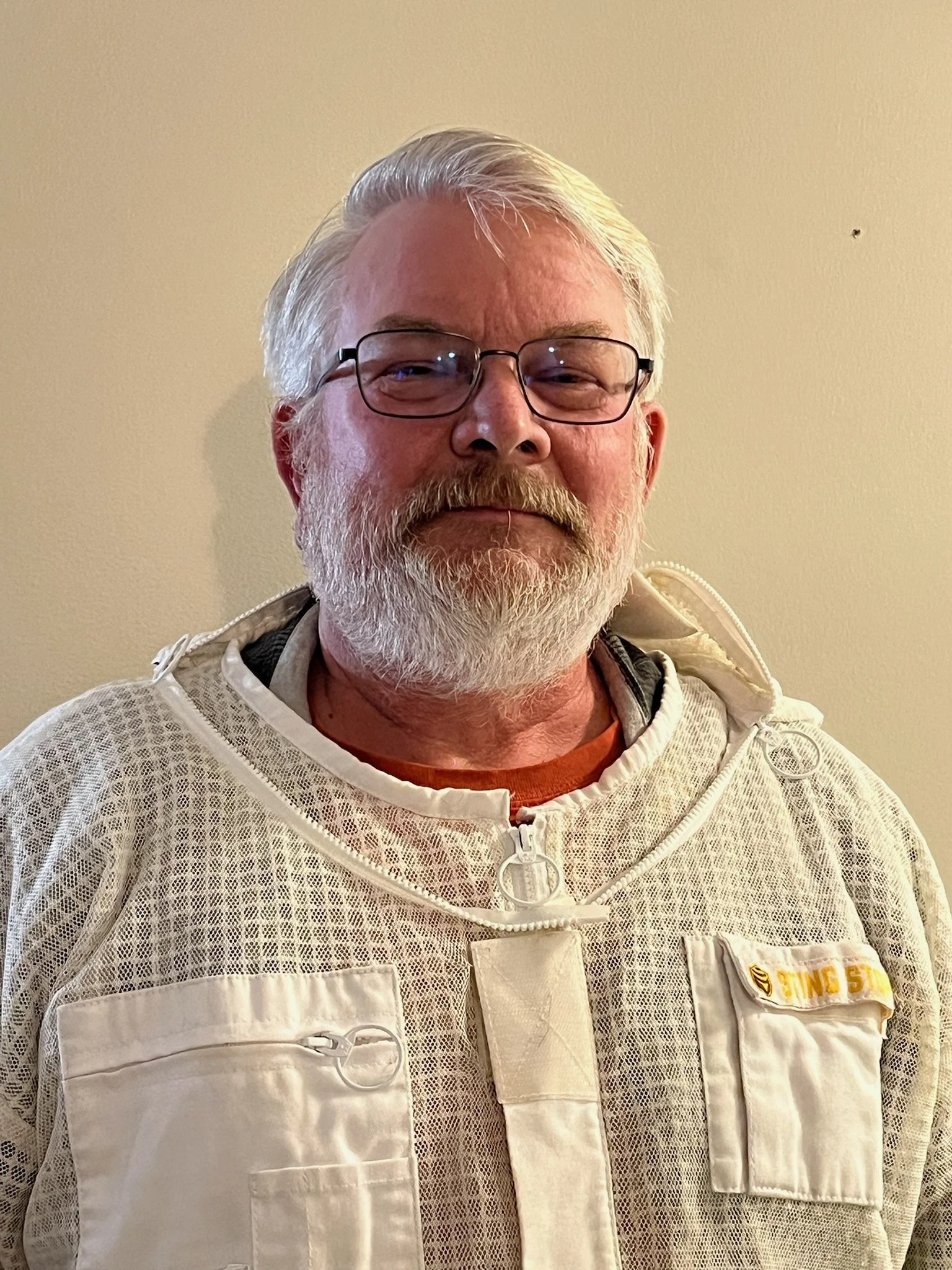
Brian Long, President
Goochland | 10-12 hives | Manages for limited honey production and self-sustainability (limit the need to purchase queens, bees and woodenware) and as a fun hobby.
I started Beekeeping with two hives as a way to bring more pollinators into my garden and by taking the Beginning Bee Keeping Class. I quickly realized there was way more to bee keeping then just setting up hives and I have enjoyed the continual learning journey I have been on. I told myself that I only wanted 2-3 hives and I’ll telling myself now I only want 10-12 hives, so we will see how this works out.
I am still experimenting with what management style works best for myself, but I only treat mites with the least invasive method based on mite counts. This has been with OAV and Formic Acid.

Ian Hemstock, Vice President
Western Goochland | 5 hives | Manages for sustainability and moderate honey production
An English ex-pat, in 2012 I took advantage of a business opportunity to relocate into the United States, landing in Midlothian Virginia, along with my wife & our twin sons.
In early 2023 we took the beginner beekeeper class,and began our beekeeping journey with two NUCs from one of HBA’s hugely experienced Technical Advisors. “I’ll only have two” quickly turned into five and we plan to keep growing, whilst wanting to remain a backyard or hobbyist beekeeper. I am trying to maintain a treatment free apiary and have enjoyed the meditative, relaxing experience of keeping bees while supplying my family & friends with honey.
In early 2024, I volunteered to join our newly formed HBA Apiary Committee, and which gave me a great opportunity to learn from our experienced beekeepers and technical advisors. Volunteering for the Apiary Committee, actively participating in the Club, and joining our weekly Bee Breakfasts in Powhatan, are all activities I highly recommend for new and experienced beekeepers alike. Talking, sharing information and enjoying the companionship of some great people is an important aspect in our local beekeeping community.

Phyllis Link, Vice President
Western Powhatan | <10 hives | Manages for honey production
I started my beekeeping journey 5 years ago by taking the Beginner Beekeeper course. My goal was to maintain 2 to 3 hives. However, once I got my first couple of hives, I was hooked and continue to maintain 5 to 8!
I have made plenty of mistakes but have learned much from each of them. I am currently certified as an Apprentice Beekeeper and am studying to obtain my Master Beekeeper certification. I love helping people find their joy with the bees!
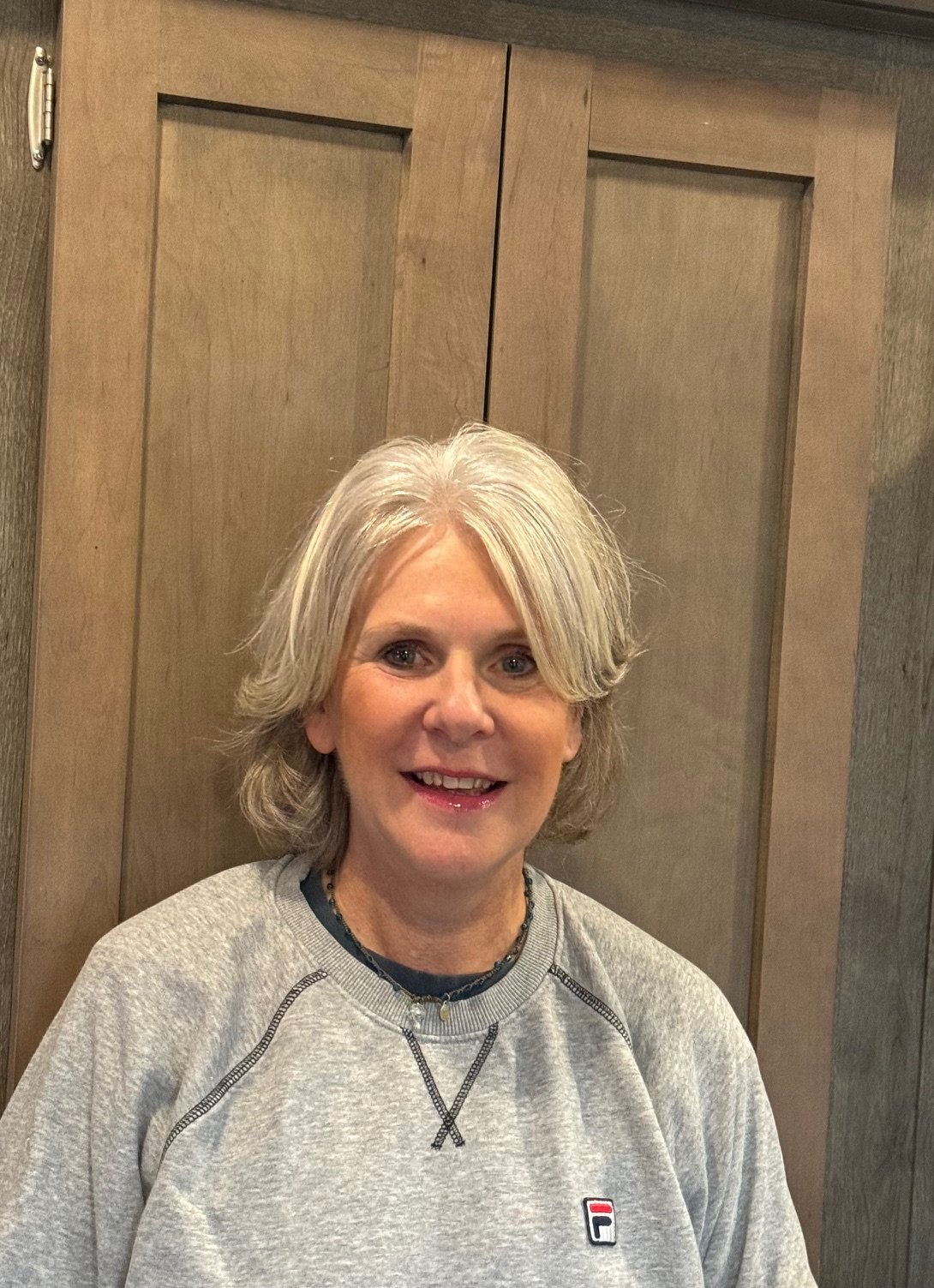
Mindy Stark, Treasurer
Powhatan | 6 hives | Manages for growth and honey production
I started beekeeping in 2019 after taking the beginners beekeeping class in Farmville, VA and moving to Powhatan. I started with 2 hives, but the winters were not kind to my hives! After 3 years of not making it through a winter, my hives finally began to thrive. My hives have grown from 2 to now managing as many as 6. I have focused on both the growth of my hives and producing honey for my family's consumption.
I joined the Huguenot Beekeepers Association at the end of Covid to learn more about beekeeping and to stay current on the latest methods of bee management. This organization has allowed me to meet others who enjoy the same hobby. In 2024 I became a member of the HBA Apiary Committee, where I helped with the care, feeding and maintenance required within the club apiary. My bees are the perfect addition to my garden!

Jeanne Clunn, Secretary and Website Administrator
North Chesterfield | 2 hives | Manages for self-sustainability (doesn’t need to buy queens and bess)
I started beekeeping in the spring of 2023, going through the Huguenot Beekeeper’s Beginners Course. What started out as “I’m only having one hive” (I live in a neighborhood in Bon Air, after all) quickly became two with a goal to grow to about 7 this year.
Initially, I wanted to keep bees just to reduce the supply chain and have more control over my food. I now know that supporting a local beekeeper would have been a much easier way to accomplish the same goal ;) But, I fell in love with watching these fascinating creatures fly in and out of the hive, carrying pollen, and searching out the best flowers in the yard.
As a homeschool mom, I love allowing my kids to be a part of the process with our best memories to date being watching new bees emerge and watching the queen lay - both of which we saw during an inspection.
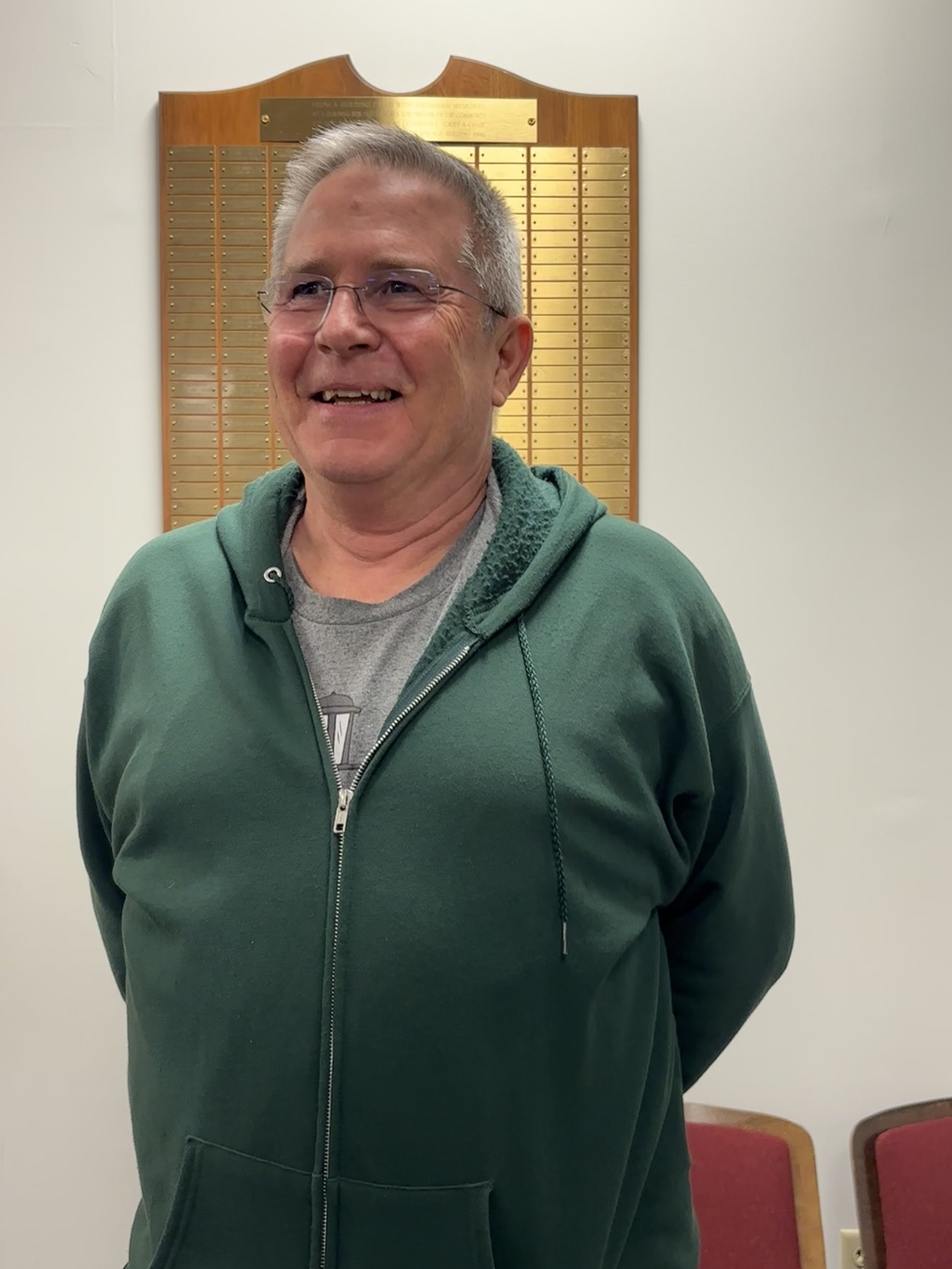
Frank Gillett, Community Outreach Coordinator
Midlothian Village / 2 hives / Manages to honey and sustainability
I started beekeeping in 2025 after attending the Beginner’s Beekeeping class. I was the obnoxious attendee who kept saying “I want just two hives, how do I do that!”
Spencer has helped me build a plan to support my two hives with two additional five frame nucs (this is the beauty of being in a club, you can get help and support from others!). I am currently planning to expand beyond that to have four five frame nucs to support swarm captures and splits. These four nucs will be used to support my full size two production hives.
I am also a member of the apiary committee which has allowed me to gain more hands-on experience with handling the bees.

Keith White, Technical Advisor
Western Powhatan | < 50 hives | Manages for queen and nuc production | Woodenware and equipment supplier
I live in western Powhatan and joined HBA in 2015. I got my first bees in 2016 and told my wife that I only wanted two colonies. So, I went into my first winter with nine and came out of winter with seven. Since then, the colony numbers have continued to grow. Now, I usually have between 30 and 40 colonies - most of them in 5-frame setups.
Although I have tried some purchased queens (Russians, VSH, etc.), most of the colonies in my apiaries are based off stock I have raised from swarms that I have caught. I'm a big fan of catching swarms from remote areas and put out 20 to 25 bait hives each year. I graft and raise queens from swarm-caught queens that have survived my treatment-free management style for multiple years. As for making honey, I'd rather make bees and do not manage my colonies to maximize the honey crop - 300 to 400 pounds a year is plenty.
In 2018, Doug Anderson (past president of HBA) and I started Honey and the Hive, selling a full line of beekeeping equipment and woodenware as well as nucleus colonies.
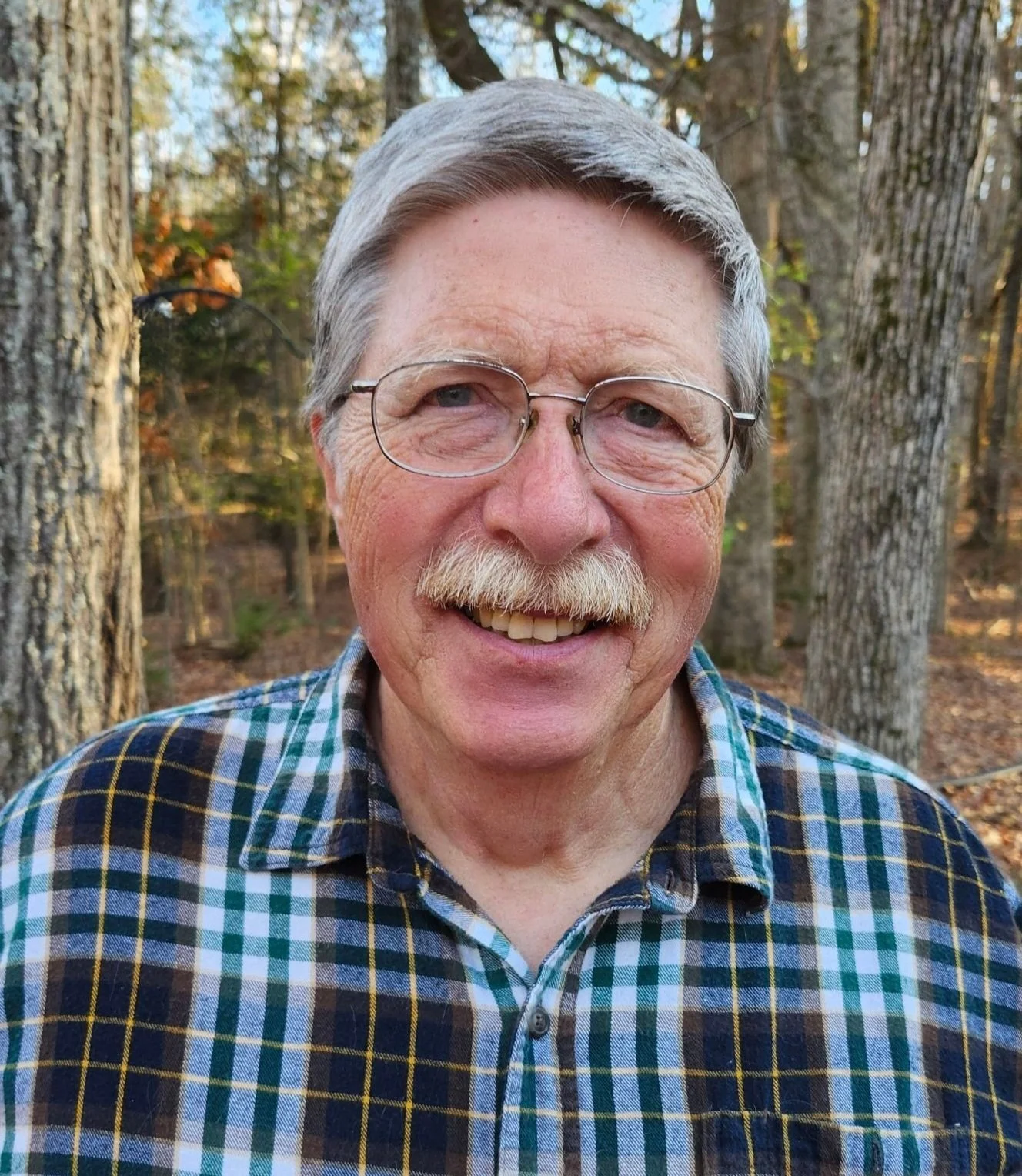
John Davis, Technical Advisor
Powhatan | ~ 100 hives | Manages for VSH queens, nucs, honey, and pollination services
I started beekeeping while in High School and took the University of Maryland beekeeping short course in the 60's. I have about 30 years of experience total and currently keep 80 to 125 colonies for the production of Nucs, Queen bees, and honey.
I raise VSH queens from John Harbo and VP queens instrumentally inseminated breeders. I am also a Virginia state Master Beekeeper and Secretary of the Virginia Beekeeping Teaching Consortium. My beekeeping operation uses minimal treatments on an as needed basis.

Allen Davis, Technical Advisor
Eastern Powhatan | 10 hives | Manages for honey production and to be self sustainable (doesn’t have to buy bees or queens)
I’ve been a proud beek since 2012. What started out as "I only want 2 hives" quickly turned into 8-12 colonies going into each winter season. After several lost colonies, I found that this was a much more sustainable model for me since I could leverage resources from stronger hives to help support weaker ones going into the winter months.
I normally use OAV to treat for mites after removing honey supers (June-July). I do alcohol washes to monitor mite loads through the late summer & fall and do further treatments, if needed. I do another OAV treatment in early winter during a broodless period. I also use several measures (natural & chemical) to try and control small hive beetles.
In a good year I will harvest 120-150 lbs of honey and am able to create resource hives from spring splits to use as needed throughout the season.

Bill Kimmich, Technical Advisor
Powhatan | <70 hives | Manages for honey production and queen rearing
I am a Virginia State Master Beekeeper with 15 years of experience and have been a member of Huguenot Beekeepers Association since its formation in 2010. I manage anywhere from 50-70 colonies per year and typically harvest 600-700 lbs of honey each year.
I produce nucleus colonies for sale in the Spring and raise queen honey bees in the Spring and Summer months. My favorite aspect about beekeeping is mentoring beginner beekeepers and educating the public on the importance of honey bees and pollinators.
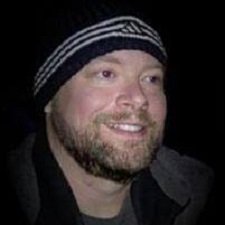
Chuck Burden, Technical Advisor
Central Powhatan | Sideline apiarist managing ~200 honeybee colonies spanning 14 apiaries across Central, Southside, and Shenandoah Valley | Manage for honey production and pollination services
I have been an apiarist for 15 years. I was first introduced to beekeeping back in 1980 while working on a local 100-acre fruit and vegetable farm back home in NW Indiana. I quickly learned from a Master Beekeeper the art of beekeeping and started my first business providing pollination services to local farmers with 80 hives.
After college, 8 years in the US Navy, and starting my family, I picked up beekeeping again in 2014, with 10 hives my first year. Today, as a hobby, I’m considered a side-line beekeeper managing several apiaries across the state in seven counties with ~200+ hives producing ~8K-9K pounds of honey in a good year. I specialize in pollinations services, honey production and raising bees to replace yearly losses. I primary manage my bees using natural practices as much as possible and avoid manmade chemicals.
I have been a member (officer/adviser) of the Huguenot Beekeepers Association for the past 10 years. I helped establishing our first club/county community apiary in the area with a focus of providing hands-on training to new beekeepers. I also am a member of Hives For Heroes for the past 5 years and have sponsored several military active duty/veterans and first responders using beekeeping as a healthy transition from service.
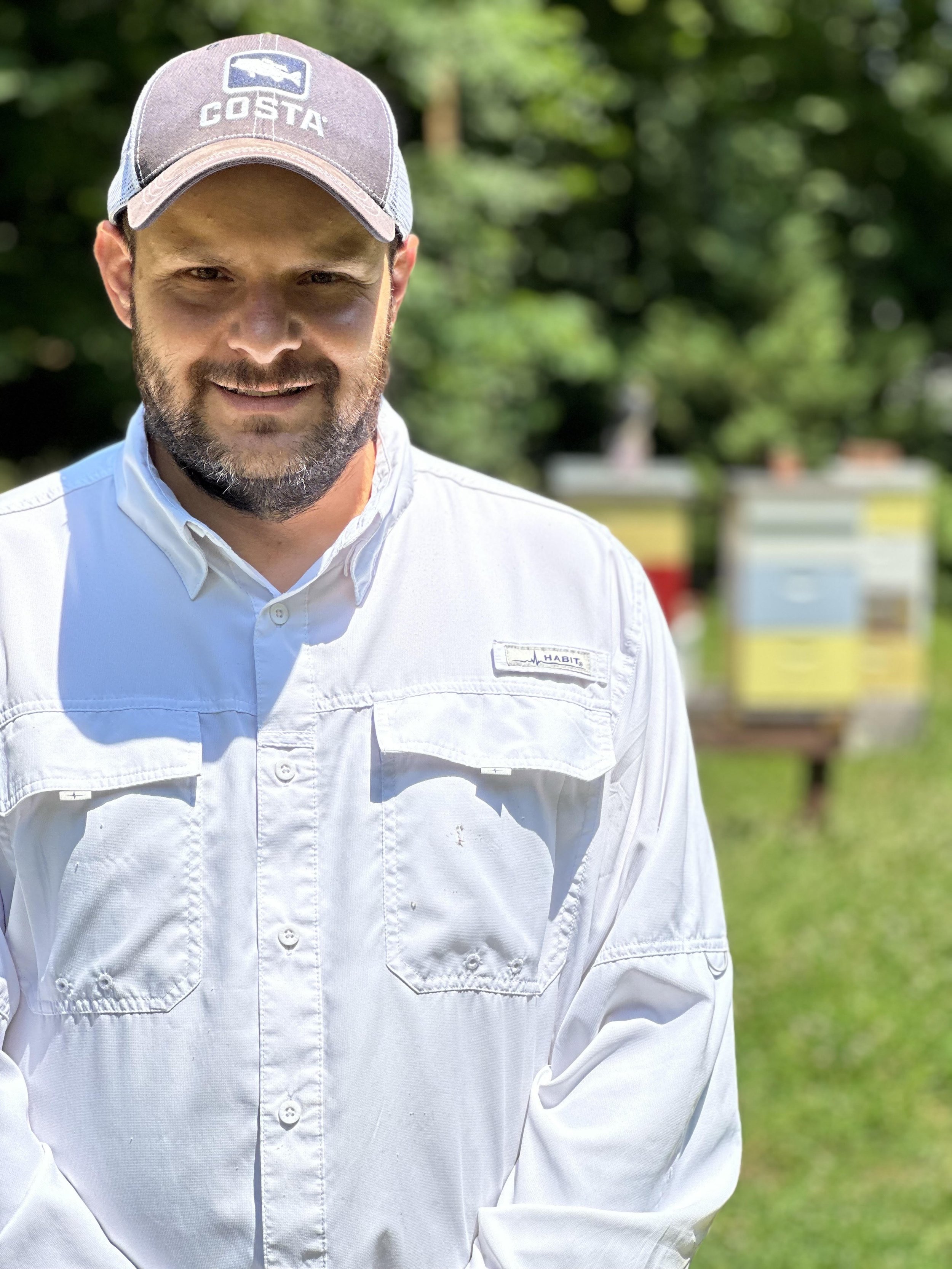
Spencer Evans, Technical Advisor
Powhatan | > 100 hives | Manages for honey, queens, and nucs
I took the Huguenot Beekeepers’ beginner class in spring 2021 and started with two Nucs that year which I nurtured into full-size hives and successfully overwintered.
In 2022, I expanded my apiary to six colonies, yielding an excellent honey crop. In spring 2023, we established outyards to grow our apiaries significantly. We expanded from six to 60 colonies by winter, and successfully overwintered, starting 2024 with 59 hives. Since then, our numbers have continued to grow.
In January 2024, I launched Evans Honey Company. We produce premium honey, which won first place in the 2024 Huguenot Beekeepers Association honey tasting contest. I regularly monitor my colonies for mites, and primarily treat with oxalic acid vapor as needed.

Sandra Smith, Board Member
Goochland | 4 hives | Manage for honey production and sustainability
Sandra Smith, CPTD, SHRM-CP, holds a Master’s degree in Industrial/Organizational Psychology from Harvard University and is passionate about the intersection of leadership, learning, and land stewardship. Alongside her husband, Kevin, she co-stewards Sanctuary at Millcreek, where they care for bees, goats, chickens, and seasonal gardens. Sandra’s interest in beekeeping blends science, systems thinking, and a deep respect for how collaboration works—both in hives and in human communities. When she’s not designing learning experiences or studying human behavior, you’ll likely find her in the apiary, the herb garden, or sharing what she’s learning with others.